How are hidden pipeline dents identified before commissioning? A pipeline may look perfect from the outside, but internal deformation can remain hidden.
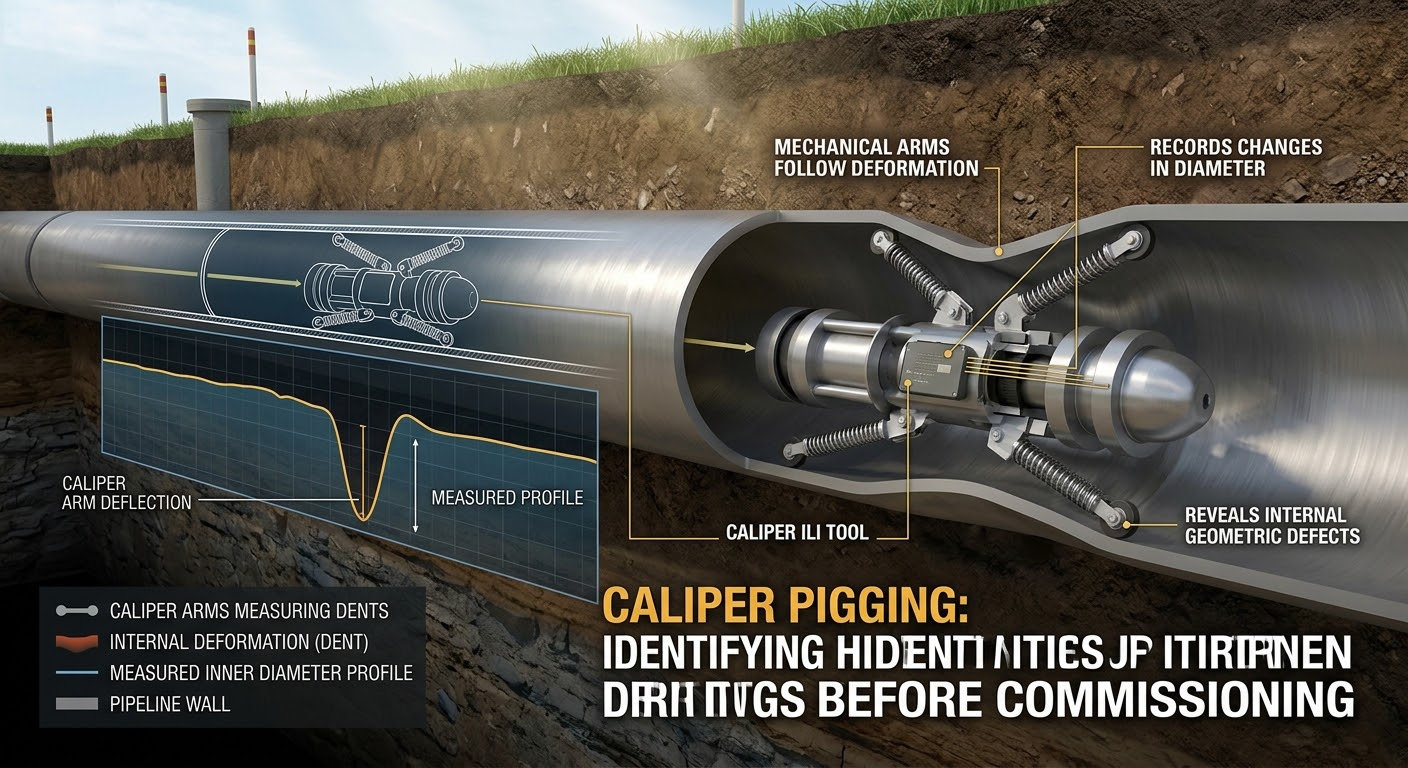
A Caliper ILI (in-line inspection) Tool travels inside the pipeline, with caliper arms continuously tracking the internal geometry and recording changes in diameter.
Early identification of dents and deformation helps ensure pipeline integrity before the line enters service.
How does caliper inspection identify the deformation?
As the Caliper ILI Tool passes through a deformed section, its mechanically connected caliper arms follow the changing internal contour of the pipeline.
The tool records these dimensional changes and produces an internal diameter and profile measurement along the inspected pipeline.
A localized deviation in the profile can indicate an internal dent, ovality or other geometric deformation that requires engineering evaluation.
The key point: a pipeline does not have to show visible external damage for an internal geometric problem to exist.
Inspect. Measure. Evaluate. Verify pipeline integrity before putting the line into service.
كيف تُرصد الانبعاجات الخفية في خطوط الأنابيب قبل التشغيل؟ قد يبدو خط الأنابيب مثاليًا من الخارج، بينما يبقى تشوّه داخلي مخفيًا فيه.
تتحرك أداة الفحص الداخلي بالكاليبر (Caliper ILI Tool) داخل خط الأنابيب، وتتتبّع أذرعها باستمرار الشكل الهندسي الداخلي وتسجّل التغيّرات في القطر.
ويساعد الرصد المبكر للانبعاجات والتشوّهات على ضمان سلامة خط الأنابيب قبل دخوله الخدمة.
كيف يرصد الفحص بالكاليبر التشوّه؟
عندما تمر أداة الكاليبر عبر مقطع مشوّه، تتبع أذرعها المتصلة ميكانيكيًا المقطع الداخلي المتغيّر لخط الأنابيب.
وتسجّل الأداة هذه التغيّرات في الأبعاد، وتُنتج قياسًا للقطر الداخلي ومقطعه على امتداد الخط الذي جرى فحصه.
وقد يشير أي انحراف موضعي في المقطع إلى انبعاج داخلي أو تفلطح أو تشوّه هندسي آخر يستدعي تقييمًا هندسيًا.
النقطة الأساسية: لا يلزم أن يظهر على خط الأنابيب ضرر خارجي مرئي حتى توجد فيه مشكلة هندسية داخلية.
افحص. قِس. قيّم. تحقّق من سلامة خط الأنابيب قبل إدخاله الخدمة.