Registering a company as an approved supplier with major oil field operators and National Oil Companies (NOCs) is a complex, multi-stage process. While the objective is consistent — to become an approved vendor eligible to receive tender invitations — the specific requirements vary from one client to another.
Each operator, whether ADNOC, Saudi Aramco, QatarEnergy or Kuwait Oil Company, maintains its own criteria and procedures. Some requirements are common across the industry, while others are specific to individual clients. This guide provides a concise overview of the registration process, using ADNOC as the primary example.
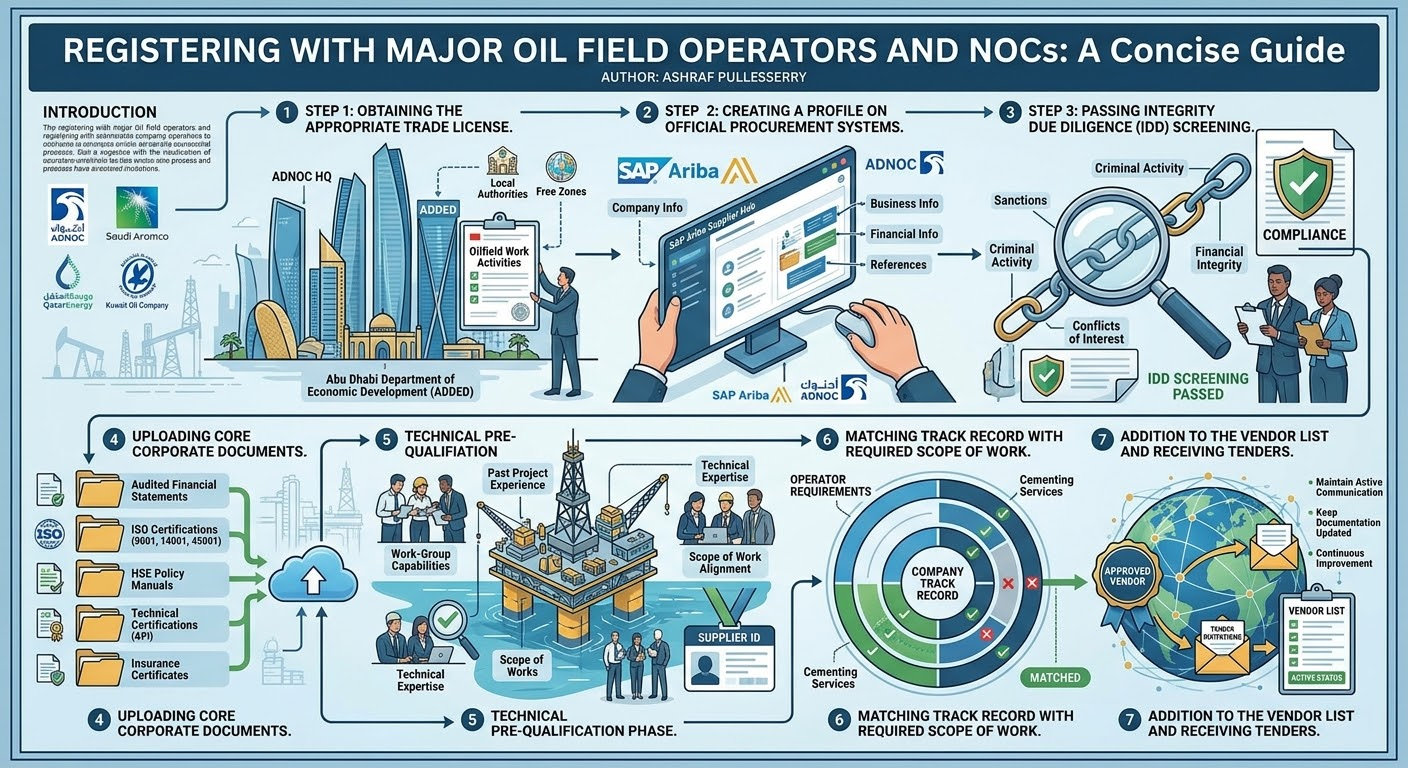
Step 1: Obtaining the appropriate trade license
The first step is securing a commercial or industrial trade license issued by the relevant local authority. For ADNOC, this typically means obtaining a license from the Abu Dhabi Department of Economic Development (ADDED) or the relevant free zone authority.
The license must explicitly include specific oilfield work activities that align with the services and/or products the company intends to provide. These activities must correspond with the service group(s) and/or product group(s) that the operator uses to categorize its procurement needs. Failure to obtain a properly categorized license can result in delays or rejection of the application.
Step 2: Creating a profile on official procurement systems
Once the trade license is secured, companies must create a profile on the operator's official procurement platform. For ADNOC, this is the SAP Ariba Supplier Hub, which serves as the central platform for supplier registration, document submission and communication.
Companies must provide detailed information, including:
- Company information: legal name, registered address, contact details and ownership structure.
- Business activities: a description of services and/or products offered, aligned with the operator's work group categories.
- Financial information: revenue, years in operation and other indicators of stability.
- References: contact information for existing or previous clients.
Other operators may use different platforms, so companies must familiarize themselves with the specific system used by each target client.
Step 3: Passing Integrity Due Diligence (IDD) screening
A critical step is passing the mandatory Integrity Due Diligence (IDD) screening, which assesses the company's integrity, ethical standards and compliance with applicable laws. The screening reviews ownership structure, key personnel and business practices to identify potential risks related to:
- Sanctions and embargoes
- Criminal activity, including fraud and corruption
- Conflicts of interest
- Financial integrity
Companies must provide comprehensive documentation, including ownership documents, legal documents and compliance certifications. Failure to pass IDD screening results in immediate disqualification.
Step 4: Uploading core corporate documents
Companies must upload a range of core corporate documents to the procurement platform, including:
- Audited financial statements: typically covering the last three to five years.
- ISO certifications: such as ISO 9001, ISO 14001 and ISO 45001.
- HSE policy manuals and procedures: detailed documentation outlining the company's approach to safety and environmental protection.
- Technical certifications: such as API certifications.
- Insurance certificates: proof of adequate insurance coverage.
All documents must be current, accurate and properly formatted. Missing or outdated documents can delay or derail the registration process.
Step 5: Technical pre-qualification phase
Once initial compliance is cleared and an official Supplier ID is issued, the company enters the technical pre-qualification phase. During this stage, operators evaluate:
- Work-group capabilities: the ability to deliver services or products within specific work groups.
- Past project experience: track record, including the scope, size and complexity of previous projects.
- Technical expertise: qualifications and experience of key personnel.
- Scope of work alignment: the match between the company's experience and the required scope of work.
Companies must submit detailed technical documentation, including project references and CVs of key personnel. Site visits or audits may also be conducted.
Step 6: Matching track record with the required scope of work
A crucial aspect of pre-qualification is demonstrating that the company's track record aligns with the operator's requirements. This involves presenting evidence of past projects relevant to the work groups being applied for.
For example, a company seeking pre-qualification for cementing services must provide evidence of previous cementing projects. The operator will compare the company's experience against its own standards. If the track record does not align, the company may be pre-qualified for a narrower range of activities, or rejected.
Step 7: Addition to the vendor list and receiving tenders
Upon successful completion of the technical pre-qualification phase, the company is added to the operator's approved vendor list. This makes the company eligible to receive tender invitations for relevant projects.
To remain in good standing and maximize opportunities, companies should:
- Maintain active communication: engage regularly with the procurement team.
- Keep documentation updated: ensure certifications and financial statements remain current.
- Demonstrate continuous improvement: invest in training, certifications and technology.
Operators periodically review their vendor lists and may remove companies that fail to meet ongoing requirements.
Conclusion
Registering with major oil field operators and NOCs is a rigorous process requiring careful preparation and thorough documentation. By understanding the key steps — from obtaining the appropriate trade license to passing IDD screening, uploading core documents and completing technical pre-qualification — companies can navigate this complex journey more effectively.
Successful registration opens the door to significant opportunities in the oil and gas sector.
Companies that meet the high standards of major operators will be well positioned to build lasting, profitable relationships in this demanding industry.
إن تسجيل شركة كمورّد معتمد لدى كبرى مشغّلي حقول النفط وشركات النفط الوطنية عملية معقّدة متعددة المراحل. ورغم أن الهدف واحد دائمًا — أن تصبح مورّدًا معتمدًا مؤهلًا لتلقي دعوات المناقصات — فإن المتطلبات التفصيلية تختلف من عميل إلى آخر.
فلكل مشغّل، سواء كان أدنوك أو أرامكو السعودية أو قطر للطاقة أو شركة نفط الكويت، معاييره وإجراءاته الخاصة. بعض المتطلبات مشتركة على مستوى الصناعة، وبعضها خاص بكل عميل. يقدّم هذا الدليل نظرة موجزة على عملية التسجيل، متخذًا من أدنوك مثالًا رئيسيًا.
الخطوة 1: الحصول على الرخصة التجارية المناسبة
الخطوة الأولى هي استخراج رخصة تجارية أو صناعية من الجهة المحلية المختصة. وبالنسبة لأدنوك، يعني ذلك عادةً الحصول على رخصة من دائرة التنمية الاقتصادية في أبوظبي أو من سلطة المنطقة الحرة المعنية.
ويجب أن تتضمن الرخصة صراحةً أنشطة عمل محددة في حقول النفط تتوافق مع الخدمات و/أو المنتجات التي تعتزم الشركة تقديمها، وأن تطابق مجموعات الخدمات و/أو مجموعات المنتجات التي يعتمدها المشغّل لتصنيف احتياجاته الشرائية. وعدم الحصول على رخصة مصنّفة بشكل صحيح قد يؤدي إلى تأخير الطلب أو رفضه.
الخطوة 2: إنشاء ملف على منصات الشراء الرسمية
بعد الحصول على الرخصة التجارية، يجب على الشركة إنشاء ملف على منصة الشراء الرسمية للمشغّل. وفي حالة أدنوك، هي منصة SAP Ariba Supplier Hub، المنصة المركزية لتسجيل المورّدين وتقديم المستندات والتواصل.
ويجب على الشركات تقديم معلومات تفصيلية تشمل:
- معلومات الشركة: الاسم القانوني، والعنوان المسجّل، وبيانات الاتصال، وهيكل الملكية.
- الأنشطة التجارية: وصف للخدمات و/أو المنتجات المقدّمة، متوافق مع تصنيفات مجموعات العمل لدى المشغّل.
- المعلومات المالية: الإيرادات، وسنوات التشغيل، وغيرها من مؤشرات الاستقرار.
- المراجع: بيانات الاتصال بعملاء حاليين أو سابقين.
وقد يستخدم مشغّلون آخرون منصات مختلفة، لذا على الشركات التعرّف على النظام المحدد الذي يستخدمه كل عميل مستهدف.
الخطوة 3: اجتياز فحص العناية الواجبة للنزاهة (IDD)
من الخطوات الحاسمة اجتياز فحص العناية الواجبة للنزاهة الإلزامي، الذي يقيّم نزاهة الشركة ومعاييرها الأخلاقية والتزامها بالقوانين المعمول بها. ويراجع الفحص هيكل الملكية والموظفين الرئيسيين والممارسات التجارية لرصد المخاطر المحتملة المتعلقة بـ:
- العقوبات وحالات الحظر
- الأنشطة الإجرامية، بما فيها الاحتيال والفساد
- تضارب المصالح
- النزاهة المالية
ويجب على الشركات تقديم مستندات شاملة، منها مستندات الملكية والمستندات القانونية وشهادات الامتثال. والإخفاق في اجتياز هذا الفحص يعني الاستبعاد الفوري.
الخطوة 4: رفع المستندات الأساسية للشركة
يجب على الشركات رفع مجموعة من المستندات الأساسية على منصة الشراء، منها:
- القوائم المالية المدققة: وتغطي عادةً آخر ثلاث إلى خمس سنوات.
- شهادات الأيزو: مثل ISO 9001 وISO 14001 وISO 45001.
- أدلة وإجراءات سياسة الصحة والسلامة والبيئة: توثيق تفصيلي لنهج الشركة في السلامة وحماية البيئة.
- الشهادات الفنية: مثل شهادات API.
- شهادات التأمين: ما يثبت وجود تغطية تأمينية كافية.
ويجب أن تكون جميع المستندات سارية ودقيقة ومنسّقة بالشكل الصحيح؛ فالمستندات الناقصة أو المنتهية قد تؤخر عملية التسجيل أو تعطّلها.
الخطوة 5: مرحلة التأهيل الفني المسبق
بعد اجتياز الامتثال الأولي وإصدار رقم مورّد رسمي، تدخل الشركة مرحلة التأهيل الفني المسبق. وفي هذه المرحلة يقيّم المشغّلون:
- القدرات ضمن مجموعات العمل: القدرة على تقديم الخدمات أو المنتجات ضمن مجموعات عمل محددة.
- الخبرة في المشاريع السابقة: السجل السابق، بما في ذلك نطاق المشاريع وحجمها ودرجة تعقيدها.
- الخبرة الفنية: مؤهلات الموظفين الرئيسيين وخبراتهم.
- التوافق مع نطاق العمل: مدى مطابقة خبرة الشركة لنطاق العمل المطلوب.
ويجب تقديم مستندات فنية تفصيلية، منها مراجع المشاريع والسير الذاتية للموظفين الرئيسيين، وقد تُجرى زيارات ميدانية أو عمليات تدقيق.
الخطوة 6: مطابقة السجل السابق مع نطاق العمل المطلوب
من الجوانب الجوهرية في التأهيل المسبق إثبات أن السجل السابق للشركة يتوافق مع متطلبات المشغّل، وذلك بتقديم أدلة على مشاريع سابقة ذات صلة بمجموعات العمل المتقدَّم لها.
فعلى سبيل المثال، يجب على الشركة الساعية إلى التأهيل لخدمات التسميت تقديم ما يثبت تنفيذها مشاريع تسميت سابقة. وسيقارن المشغّل خبرة الشركة بمعاييره الخاصة، وإذا لم يتوافق السجل، فقد تُؤهَّل الشركة لنطاق أضيق من الأنشطة، أو تُرفض.
الخطوة 7: الإدراج في قائمة المورّدين وتلقي المناقصات
عند إتمام مرحلة التأهيل الفني المسبق بنجاح، تُضاف الشركة إلى قائمة المورّدين المعتمدين لدى المشغّل، ما يجعلها مؤهلة لتلقي دعوات المناقصات للمشاريع ذات الصلة.
وللحفاظ على وضع جيد وتعظيم الفرص، ينبغي على الشركات:
- الحفاظ على تواصل فعّال: التواصل المنتظم مع فريق المشتريات.
- تحديث المستندات باستمرار: التأكد من سريان الشهادات والقوائم المالية.
- إظهار التحسين المستمر: الاستثمار في التدريب والشهادات والتكنولوجيا.
ويراجع المشغّلون قوائم مورّديهم دوريًا، وقد يستبعدون الشركات التي لا تفي بالمتطلبات المستمرة.
الخاتمة
التسجيل لدى كبرى مشغّلي حقول النفط وشركات النفط الوطنية عملية صارمة تتطلب إعدادًا دقيقًا وتوثيقًا شاملًا. ومن خلال فهم الخطوات الرئيسية — من الحصول على الرخصة التجارية المناسبة، إلى اجتياز فحص النزاهة، ورفع المستندات الأساسية، وإتمام التأهيل الفني المسبق — تستطيع الشركات اجتياز هذه الرحلة المعقّدة بكفاءة أكبر.
التسجيل الناجح يفتح الباب أمام فرص كبيرة في قطاع النفط والغاز.
والشركات التي تستوفي المعايير العالية لكبار المشغّلين ستكون في موقع قوي لبناء علاقات مربحة وطويلة الأمد في هذه الصناعة المتطلّبة.